
Why do continuous motion form fill and seal (FFS) machines cause blurry date codes?

Continuous motion packaging lines do not move at a single, unchanging speed. Instead, they pull film via rapid intervals of acceleration and deceleration—such as when a bag-maker performs mechanical stripping to clear food particles from the seal zone. Because traditional Thermal Transfer Overprinters (TTO) rely on consistent substrate speeds to cleanly transfer ink, these sudden velocity shifts cause text compression, smudging, or inaccurate margin drift.

How do you achieve perfect date code alignment on flexible packaging film?

Flawless placement requires mounting hardware and software integration that syncs directly with your vertical or horizontal bag-making system. By connecting the TTO system to the parent machine's encoder feedback loops, the printer instantly tracks fluctuating film velocity. The system scales its print timing dynamically to match substrate speeds, ensuring crisp typography in the exact location required without dragging.

What are the printing speed capabilities of the Domino V-Series TTO units?

The Domino V-Series family is engineered to match high-volume line rates. The compact V230i offers clear 300 dpi print consistency across variable speeds ranging from 10mm/s to 750mm/s (perfectly managing high-output lines pushing over 200 packs per minute). For elite manufacturing setups, the high-speed V320i handles continuous motion packaging demands at line velocities scaling up to 1,400mm/s.

How can food packaging lines reduce TTO ribbon breakage and cost?

To prevent line stoppages, modern thermal printers drop complex mechanical wear-parts (like shims and mechanical clutches) in favor of intelligent electronic ribbon drives. Utilizing tension-buffering electronic "dancing arms" allows the ribbon to absorb high acceleration spikes safely without snapping. Additionally, selecting software with precision economy-saving modes permits variable micro-adjustments that decrease raw ribbon consumable waste by up to 60%.

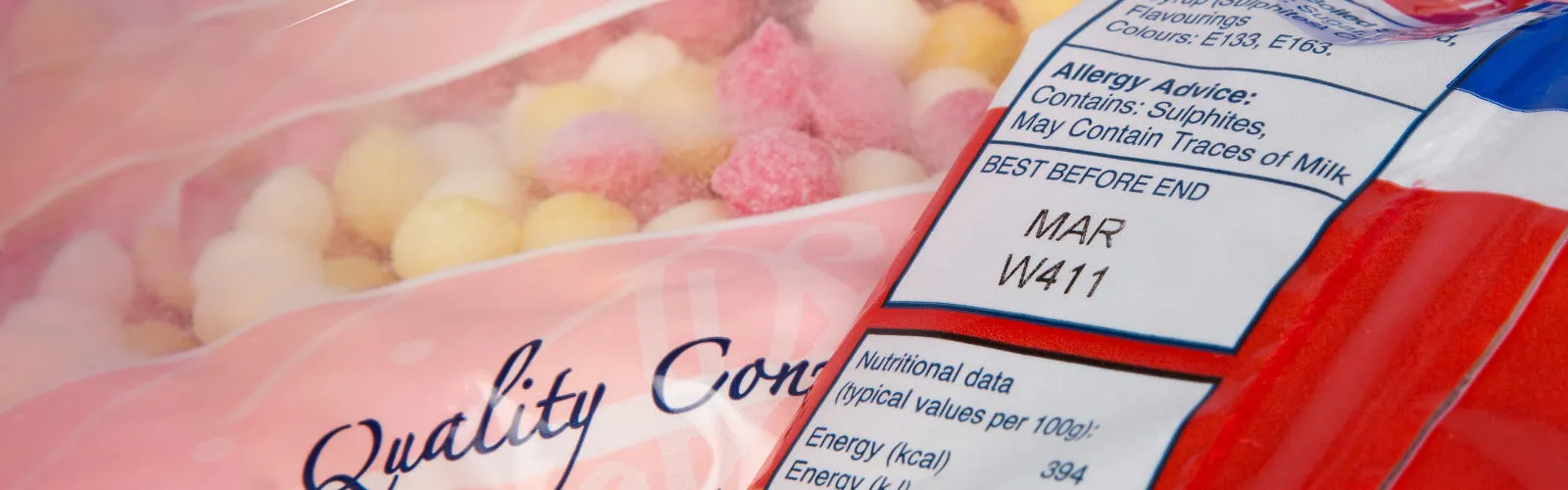
date coded confectionary bag

How To Achieve Perfect Date Code Placement on Continuous Motion Form Fill & Seal Packaging

  • By Peter Lister
  • August 01, 2017
  • General

Speed on the production line is key to your profits. It’s one of the reasons that form fill seal packaging machines are so popular with FMCG manufacturers. But if the placement of your date codes is off, the relationship between thermal transfer overprinting technology and your form fill and seal (FFS) packaging machines can become more of a hindrance than a benefit. Here’s how to get the perfect date code placement, every single time.

The challenges of continuous motion form fill and seal packaging machines

With many form fill seal packaging machines, the film is constantly in motion. That can be great for productivity. But it’s important to note that continuous motion does not mean continuous speed. In fact speed is often variable, with the machine rolling the film in short bursts of acceleration and deceleration. (This is common with snack packaging, for example, where machines incorporate a mechanical stripping action to remove crumbs from the seal area. Watch our specialist video below to learn more).

This cycle of ramp up and slow down causes problems when applying date codes with thermal printers, which rely on consistent minimum speeds to print with the best clarity and accuracy. Ultimately this can slow your production line at the very point you need to be operating at maximum efficiency.

Not so with Domino.


Achieving perfect date code placement

To combat this problem, Domino has designed application-specific hardware for use when integrating our V-Series of thermal transfer printers with form fill and seal packaging machines. This technology ensures date codes are applied in exactly the right area, with optimum clarity and flawless consistency. As we have ensured our printers are integration ready, you can install them “ready-to-go” on the horizontal or vertical form fill seal packaging machines of your choice.

Take a look at our case study

You can take a look at our innovative V-Series TTO hardware in action with this video.


Alternatively find out how Domino’s V230i printer sailed through rigorous testing to qualify as a solution for marking variable information on packaging film with FFS packaging machines on a bag-maker. Read Domino’s V230i Over Qualifies for Heat and Control case study.

Need more information?

Contact us about our innovative and award-winning printing and marking solutions. Get in touch

Featured Articles