From the earliest days of packaged products and consumer goods, there have always been brands that have challenged accepted values and product formats with innovative ideas. As digital technologies and ecommerce expand access to broader potential audiences, more challenger brands are emerging and vying for attention in increasingly crowded digital spaces.
Digital Printing often plays a key role in their success stories, giving converters the tools to empower challenger brands to stand out from the competition with eye-catching direct-to-consumer packaging, whilst avoiding the larger investment into conventional print runs with high minimum order quantities.
The Rise of Challenger Brands
Challenger brands don’t just typically enter a product category – they challenge the status quo and disrupt traditional ways of thinking and selling. They often have bold ideas and a clear sense of purpose, challenging industry norms around the product offering available. Frequently championing worthy causes to bring healthier, more sustainable alternatives to consumers, they reshape expectations.
Challenger brands can often strike a more personal chord with consumers. Their dynamic, values-driven storytelling enables them to position themselves as an alternative to the consistency of many more established brands – making them feel more human, relevant, and aligned with the expectations of today’s consumer. This is reflected in the direct-to-consumer model many challengers adopt, with ecommerce and social media channels helping them build a loyal following and deepen relationships through engaging content and targeted events.
As the first physical touchpoint with the brand and product, creative packaging and labels that set the brand apart from the established competitor norms are critical. The unboxing experience, powered by digitally printed packaging and labels, is becoming a key differentiator for challenger brands looking to connect with consumers on a personal level.
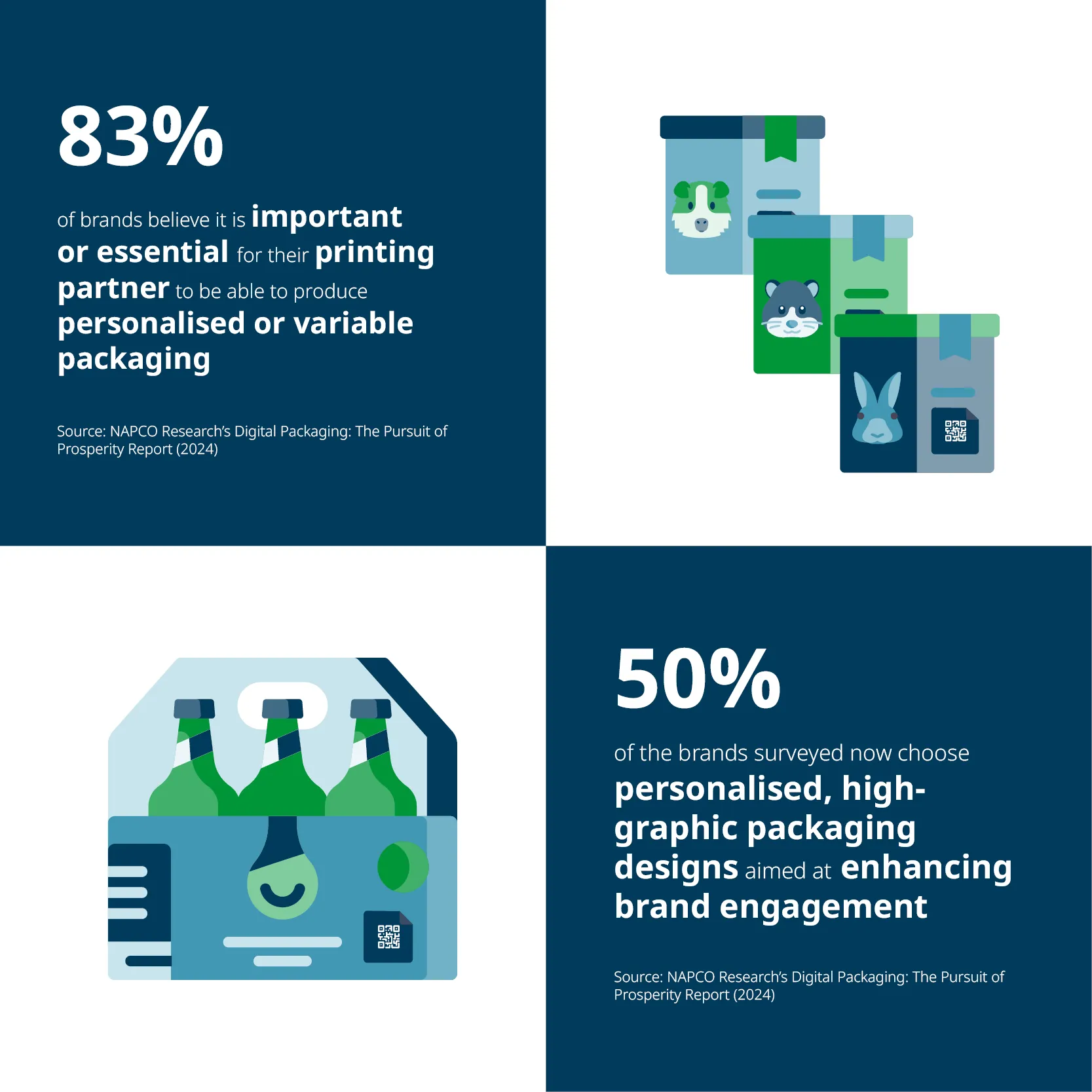
Personalised, high-graphic packaging designs are now a strategic priority for nearly half of brands – driven by the desire to create memorable unboxing experiences to enhance brand engagement, according to NAPCO Research’s Digital Packaging: The Pursuit of Prosperity Report (2024).
Digitally-Printed Direct-to-Consumer Packaging: A Perfect Fit
While an impersonal brown shipping box serves its functional purpose and ensures a product arrives safely with the consumer, challenger brands need their packaging to work harder and be more memorable. They see it as a way to extend the brand experience and an opportunity to surprise, delight, and leave a lasting impression. Challenger brands are adept at utilising design as a strategic tool, regularly refreshing visuals to maintain momentum and relevance. Limited-edition packaging tied to cultural moments or global events also allows them to stay topical, spark conversation, and set trends that often ripple across the category.
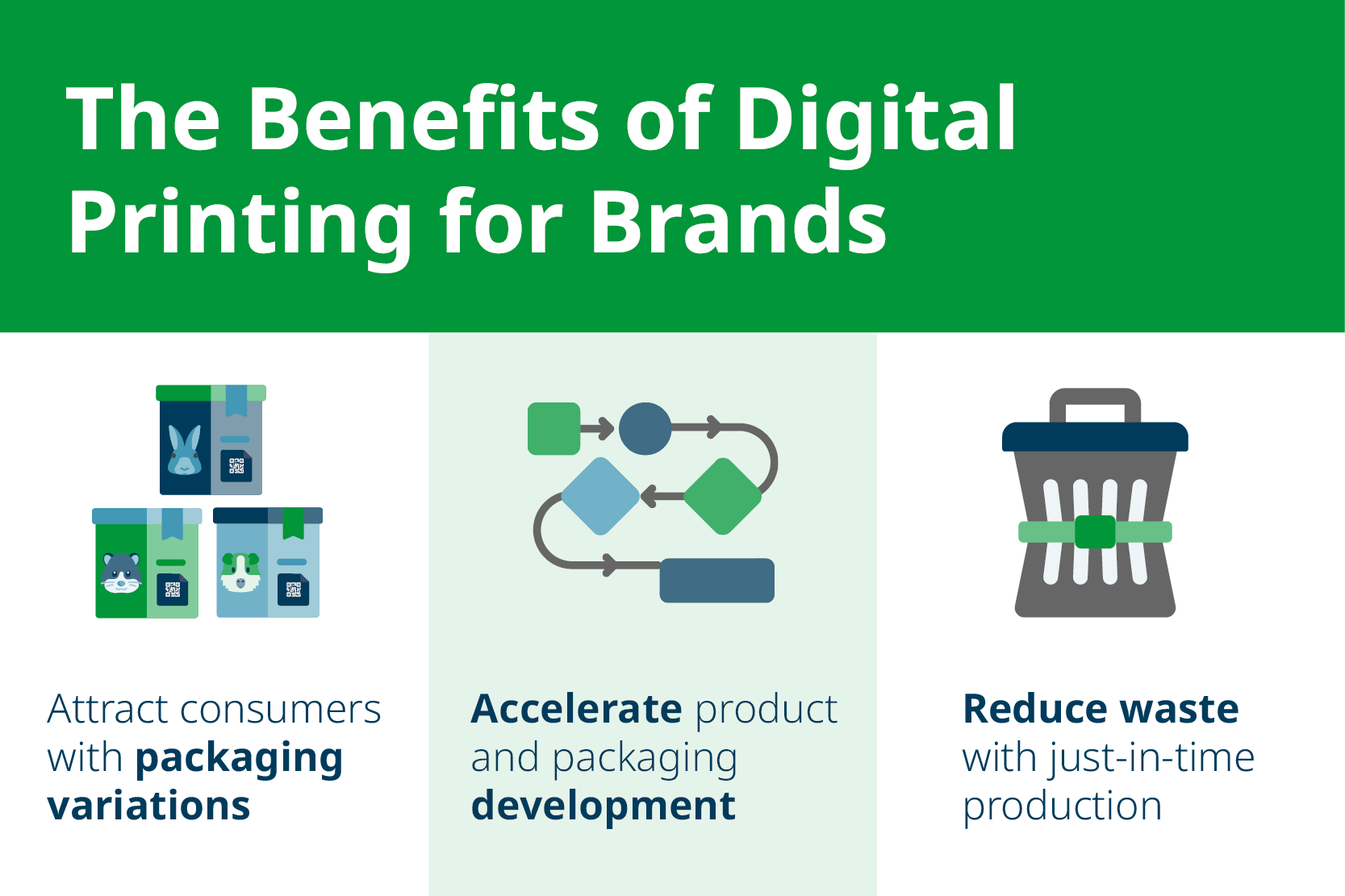
In this dynamic scenario, the converter’s role is evolving from a transactional printer-to-brand supplier to a strategic brand partner, leveraging their digital expertise to support brands in achieving their direct-to-consumer packaging design goals. Digital Printing technology makes a valuable contribution, by speeding up packaging development cycles through rapid prototyping and supporting greater supply chain flexibility with shorter lead times.
Converters using digital presses are more agile, ready to support brands looking to enhance their market presence via a range of packaging variations that wouldn’t be possible with the high minimum order quantities demanded by traditional print. Digitally printed packaging and labels lower the entry barriers – helping even boutique brands to compete through the use of colourful, custom packaging.
Digital printing can also add value when it comes to sustainability. Improving product and packaging sustainability is close to the heart of many challenger brands, who value just-in-time production to avoid printing waste and obsolescence of overrun stock.
The Emotional Connection with Printed, Direct-to-Consumer Packaging
Digital printing technology is unlocking new opportunities for converters to support challenger brands in their consumer engagement campaigns, enabling them to connect with consumers on a deeper, more personal level and build a community of loyal customers.
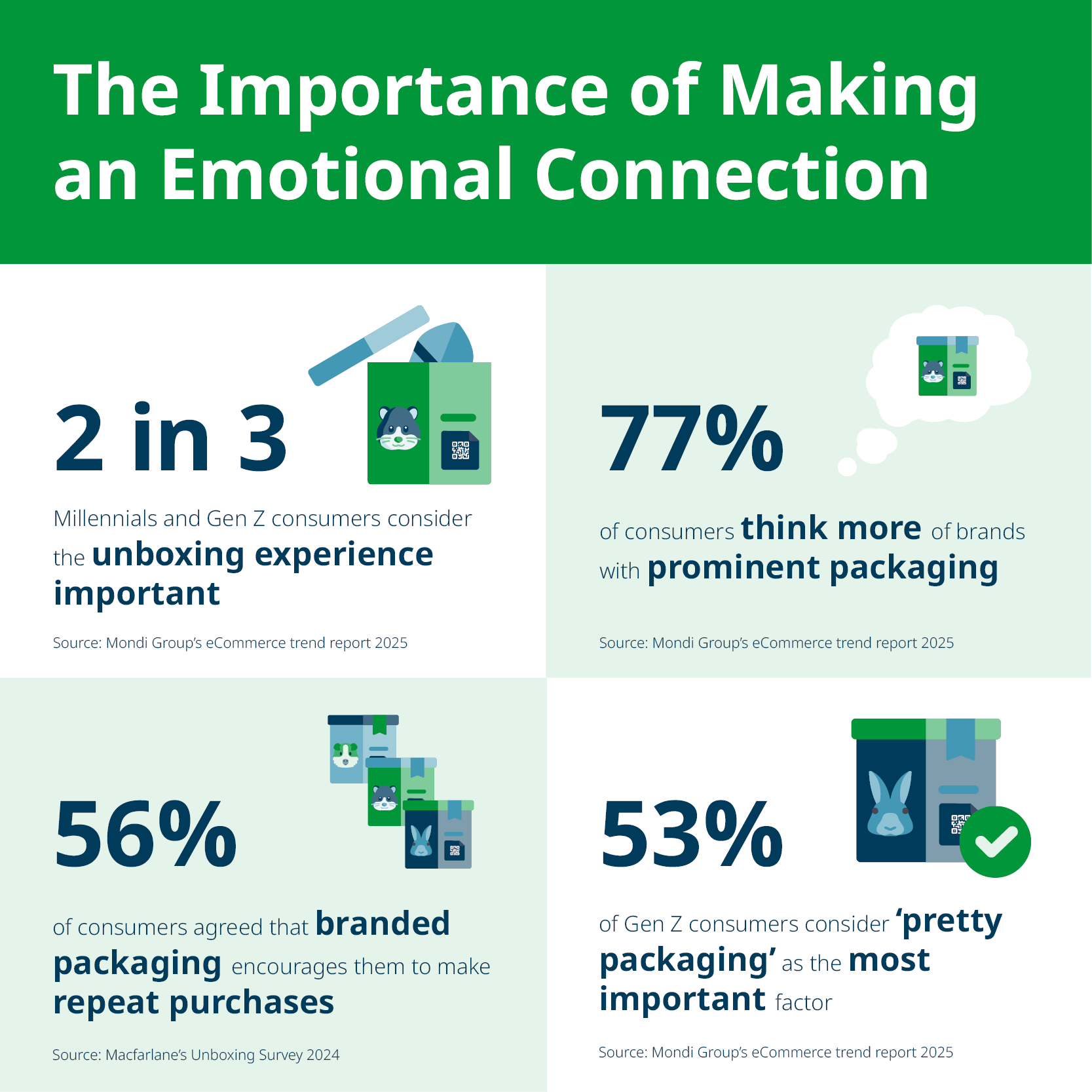
More than half (56%) of consumers surveyed in Macfarlane’s Unboxing Survey 2024 agreed that branded packaging encourages them to make repeat purchases, making a compelling case for the use of packaging print to support brand building.
Macfarlane’s research is supported by Mondi Group’s eCommerce trend report (February 2025), which found that two-thirds of Millennials and Generation Z consumers consider the unboxing experience important, with 53% of Generation Z respondents considering ‘pretty packaging’ as the most important factor.
Appealing – and especially unique – packaging can significantly help elevate brand perception, with nearly 4 in 5 (77%) respondents from the Macfarlane’s research agreeing that they think more of brands with prominent packaging. This presents a powerful opportunity for brands to harness digital printing, which enables continuous packaging innovation, mass customization, as well as one-of-a-kind packaging that adds a special touch.
By helping brands produce digitally printed packaging that resonates with consumers, converters deliver added value. When consumers are impressed enough to film their unboxing or share their experience, it can lead to free – and even viral – marketing through word of mouth and social media. On YouTube alone, videos with “unboxing” in their title have received over 25 billion views in a single year, helping make the excitement of receiving and opening products a shared experience for consumers while growing the brand.
Connected Consumer Packaging – The Future of Consumer Engagement
Looking ahead, digital printing – particularly digital variable data printing – is set to become one of the key tools for brands seeking to foster long-term loyalty and community.
Already, research shows an increasing demand for interactive and smart packaging features, such as QR codes, visual search, NFC tags, and augmented reality triggers, which help brands to continually elevate the consumer experience. According to Merkle’s 2025 Connected Experiences Research Report, more than a third (37%) of consumers are more likely to purchase a product because it offers a connected experience. And, perhaps consequently according to NAPCO Research, 83% of brands believe it is important or essential for their printing partner to be able to produce personalised or variable packaging.
As consumer expectations evolve, packaging is no longer just a protective layer – it’s a powerful brand touchpoint. For converters, this shift represents a clear opportunity to add meaningful value to their brand customers. By offering digitally printed packaging and labels with connected features like QR codes that link to immersive content, interactive experiences, and personalised messaging, converters enable brands to deepen engagement and build lasting loyalty.
Converters equipped to deliver high-quality, on-demand solutions are not only meeting the needs of today’s dynamic, direct-to-consumer landscape – they’re helping challenger brands stand out, scale up, and shape the future of packaging-led brand storytelling.