Global sustainability regulations are reshaping how brands think about packaging. The last century has seen packaging evolve from a simple product protector into a multi-faceted asset – simultaneously enabling product protection, brand communication, regulatory compliance, and customer engagement, both on the shelf and through the unboxing experience.
With the expansion of Extended Producer Responsibility for Packaging (EPR) schemes across US states and the introduction of the EU Packaging and Packaging Waste Regulation (PPWR), packaging reusability and recyclability have become a key focus for brand owners.
This blog explores how converters can help brand owners respond to evolving regulatory demands – including packaging EPR 2026 requirements and PPWR-driven changes to packaging design – while enabling more sustainable, circular packaging solutions.
What is packaging EPR?
More than 70 countries worldwide now operate packaging EPR frameworks, making brand owners or importers liable to fund local recycling and disposal of product packaging through a packaging levy. The scope and exclusions of the frameworks vary as much as waste management and recycling infrastructure, with some including a mandate to reduce packaging and improve recyclability. Every packaging component, including labels, substrates, and printing inks, is affected.
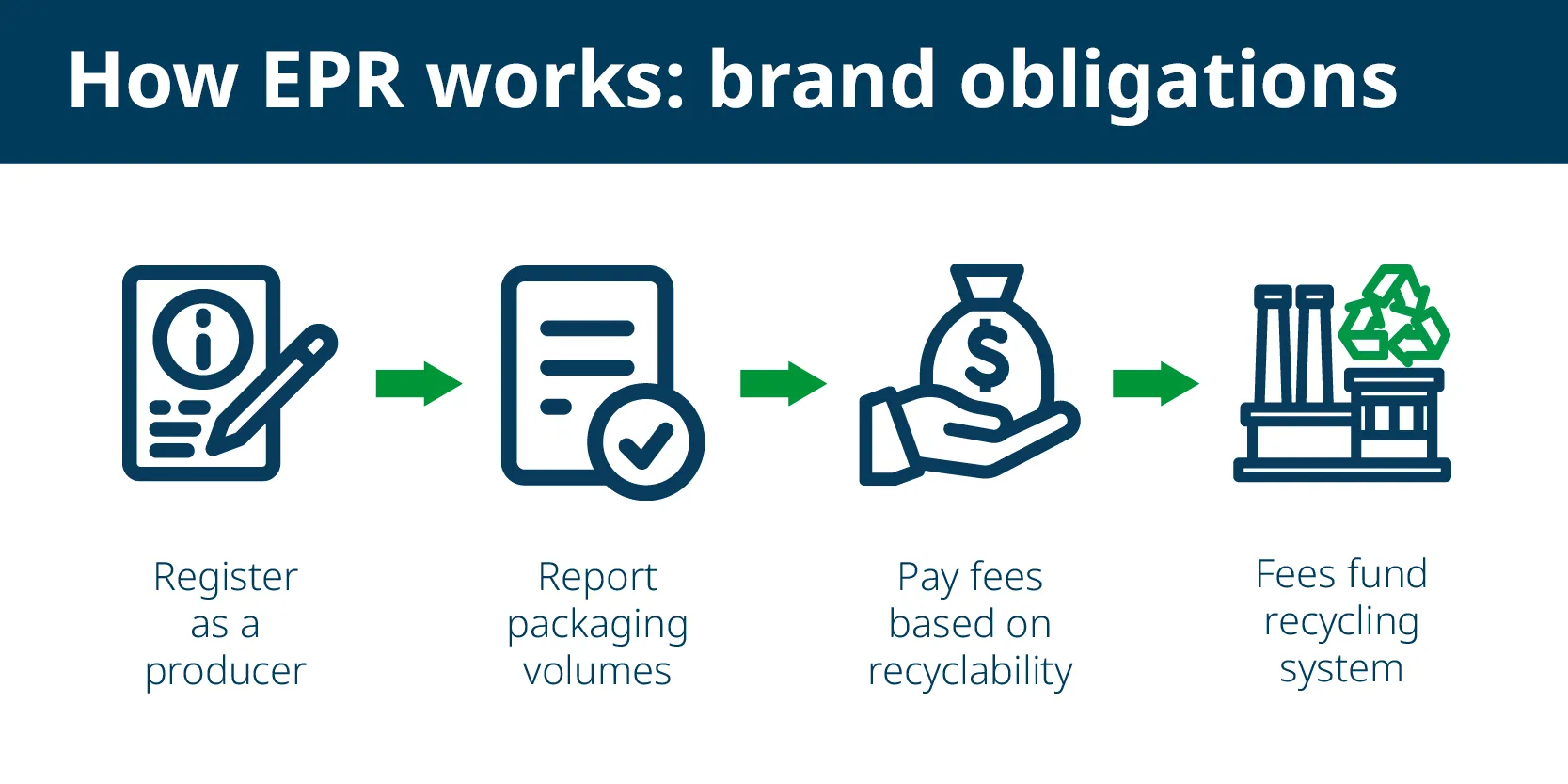
In the US, packaging recycling is managed at the state level. Since 2021, seven states—including Maine, Oregon, Colorado, California, Minnesota, Maryland, and Washington—have launched EPR schemes. While the scope varies, all require brands to register with the Circular Action Alliance (currently the sole US Producer Responsibility Organization), report packaging volumes, and pay EPR fees.
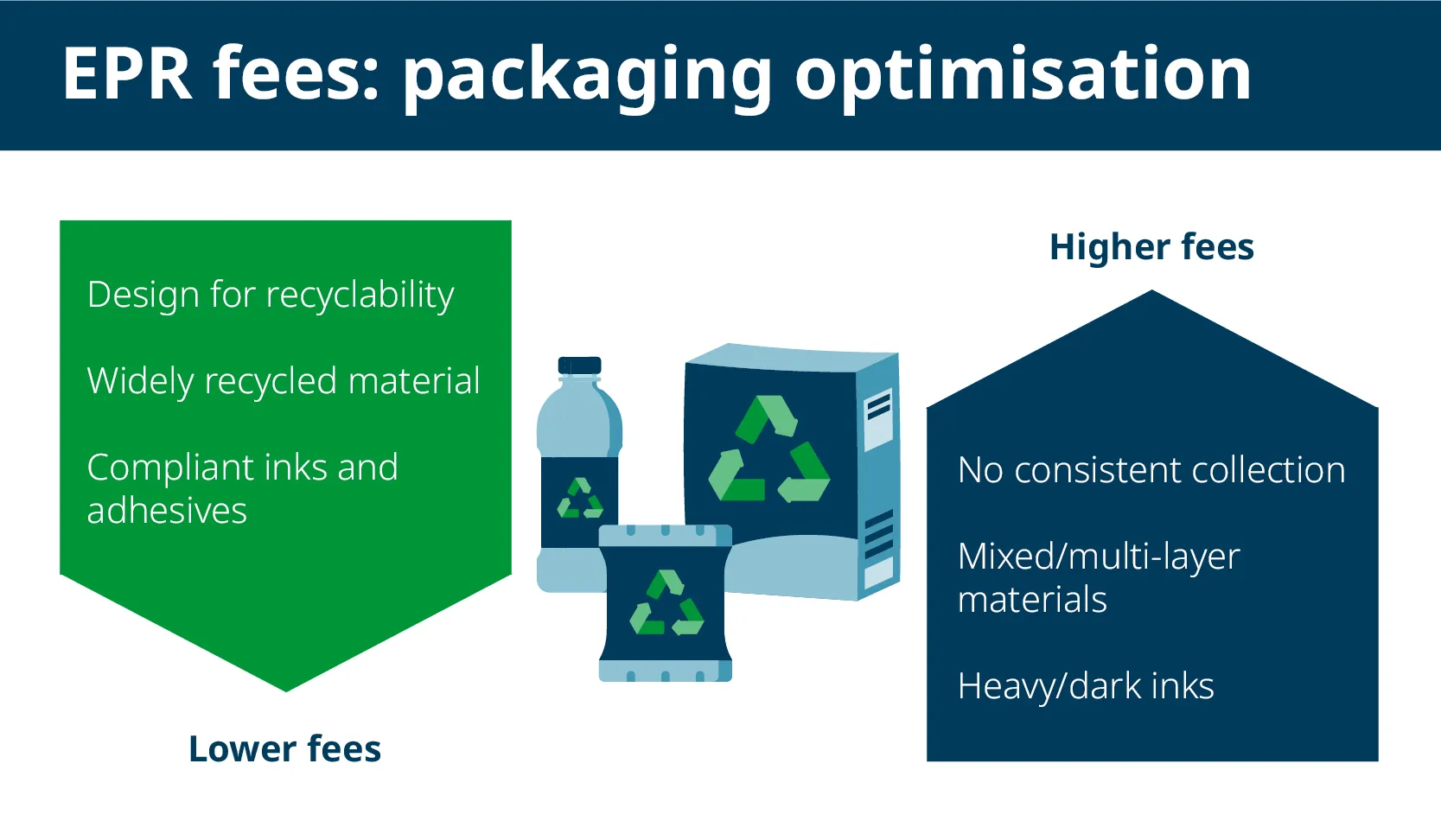
Some EPR frameworks put further demands on producers. California’s Plastic Pollution Prevention and Packaging Producer Responsibility Act, SB 54, for example, mandates a reduction in plastic packaging by 25%, recycling 65% of single-use plastics, and making 100% of packaging recyclable or compostable by 2032.EPR fees are usually based on packaging weight or unit count, though calculation methods differ. Some states use eco-modulated fees to incentivize sustainable packaging design and material choices, discouraging the use of less environmentally friendly materials.
Eco-modulation is used to classify packaging waste based on recyclability, suitability for reuse, toxicity, and other factors. Criteria vary by state, with materials that are recycled statewide often benefiting from bonus payouts, while those that are more difficult to recycle may be penalized with higher charges or even be banned. Poor ink or material choices can also downgrade otherwise recyclable packaging, resulting in higher fees for brands.
There are no plans for federal EPR standardization, but at least ten other states are considering legislation. Industry stakeholders, including brands, manufacturers, and standards bodies like GS1, are working toward more consistent data, reporting, and packaging design.
EPR is more than just a tick-box exercise for brands; it links packaging design and material choices directly to costs, recyclability performance, and market competitiveness.
Driving packaging recyclability and reducing fees
Brand owners need packaging partners who can help them navigate the complex EPR landscape by providing the data they need to demonstrate packaging compliance.
High-quality information is becoming a differentiator, and preferred packaging partners are those able to supply detailed, well-structured packaging documentation while also aligning with industry standards and enabling seamless data exchange across converters and brand owners. The required information includes material declarations on composition and weight, as well as compliance documentation for the inks and adhesives used. The data provided makes packaging EPR reporting easier for brands, helps them provide evidence for market surveillance authorities and internal sustainability audits, and, when selling into EU markets, supports brands in creating declarations of conformity under PPWR.
Converters can prepare for customer demands for data by ensuring they have access to documentation provided by their own material and ink suppliers, potentially even aggregating their data into packaging compliance assessments ready to share with their customers.
Beyond reporting, packaging EPR and PPWR are prompting many brands to redesign packaging according to ‘Design for Recyclability’ principles, including switching to widely recyclable packaging materials, using smaller, easily removable labels, and considering the impact of inks on recycling processes. This creates an opportunity for converters to step beyond their traditional role as transactional vendors and add value for their customers.
In close collaboration with brands, packaging designers, and material suppliers, converters who are well-versed in local packaging EPR fee structures and PPWR demands can provide regulatory guidance. Their know-how of printing technology, inks, and substrates can help brands create cost-efficient, compliant packaging and labels, while meeting marketing objectives with brand-compliant colors and excellent print quality.
Digital printing as an enabler
PPWR and packaging EPR regulations are still in flux, with new initiatives such as digital product passports due for roll-out over the coming years. Being able to quickly adapt packaging designs to keep up with changing regulations is important to brands.
Digital Printing technology is becoming essential for delivering packaging updates to comply with emerging regulations with a fast turnaround. Converters with access to digital presses can also efficiently produce shorter print runs of packaging variations, i.e. featuring regional recycling symbols.
Digital’s ability to add variable data elements will be key to the roll out of digital product passports, where printed, often serialized, QR codes powered by GS1 are set to be used by brands to share material, recyclability, and product and packaging compliance data via a website or app.
Preparing for the future
Evolving regulations are transforming packaging into a regulated asset, data carrier, and cost driver for brands. Brands that want to stay ahead will be looking for packaging partners to support them in this time of change and help them adapt their packaging for the future.
Converters who are familiar with local packaging EPR regulations, stay abreast of advances in recyclable materials, and can provide detailed documentation will be best positioned to help their customers stay competitive amid the regulatory changes ahead.