

Medicines for the US market are predominantly packed in bottles, with statutory information printed on labels affixed to these bottles. As Pharmaceutical manufacturers are gearing up to meet the DSCSA (Drug Supply Chain Security Act, section 582(b)(2)(A), we have made a comprehensive study to help the industry in choosing the most suitable and versatile technology for coding onto labels.
With the implementation timeline extended till November 2018, we are certain this study will help the industry in making informed decision in selecting optimum coding technology for their labelling lines.
Thermal Transfer technology (TTO), Thermal Inkjet technology ((TIJ)) and Laser printers are time tested and widely proven technologies for coding on different packaging materials. TTO is a ribbon based technology which enables printing of high resolution codes on flexible materials like laminates, pouches and labels. Its performance is proven in a wide range of industries across the globe. It is essentially a contact coding technology. TIJ is an ink based technology which has proven its performance in serialization of millions of cartons globally.
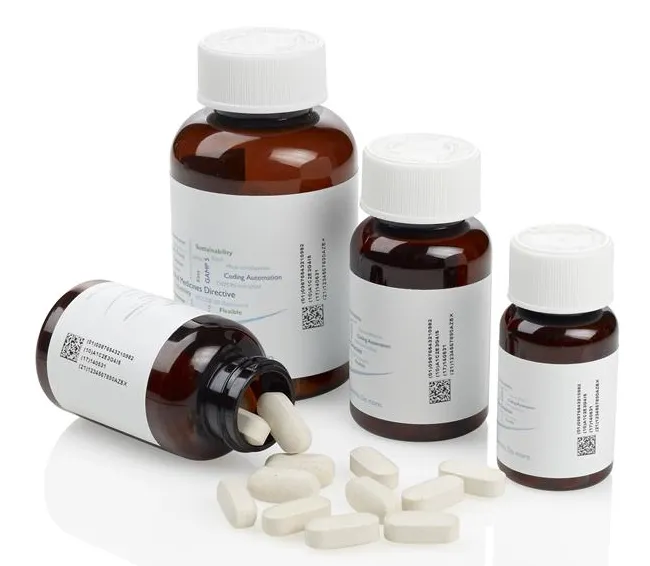
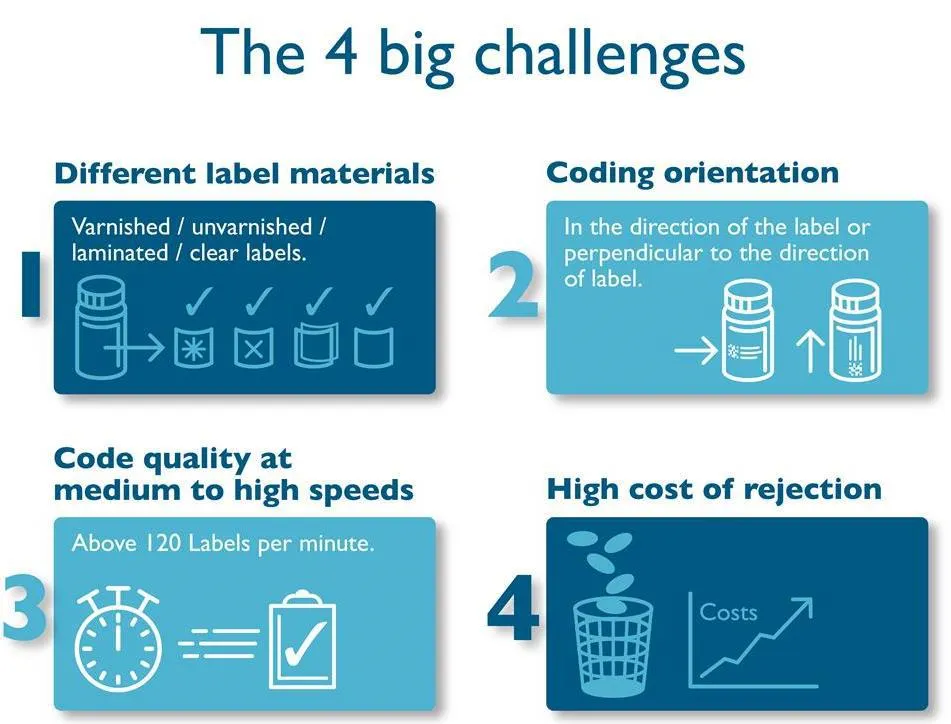
The Pharmaceutical industry is grappling to choose the optimum technology for coding on labels for bottle serialization.
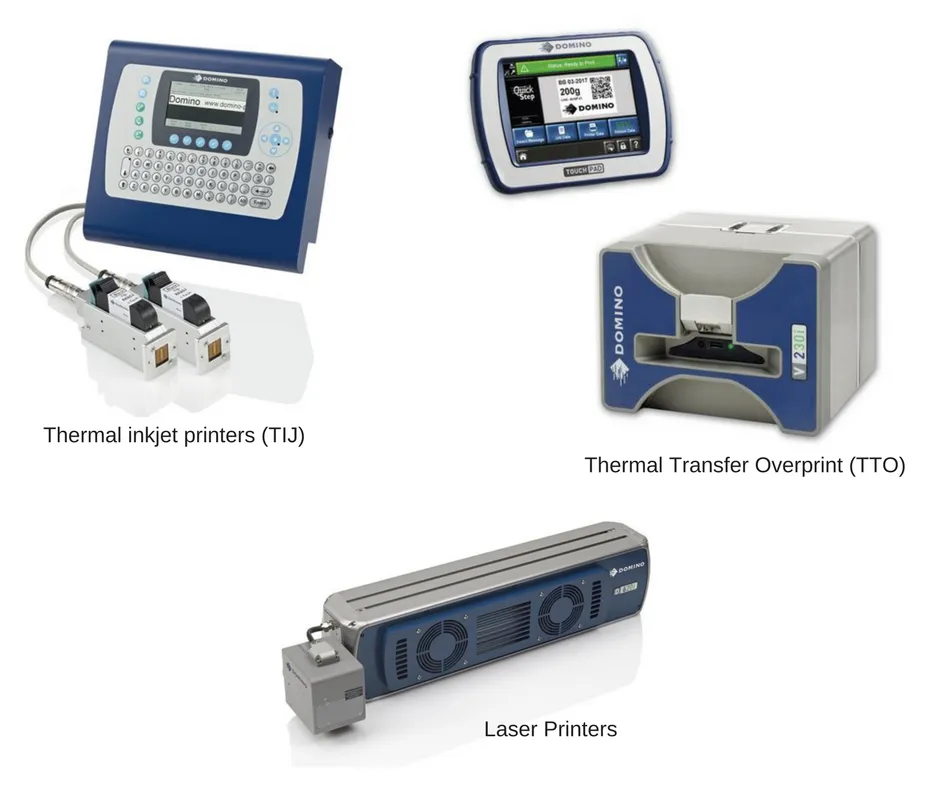
The coding technologies that are available for the manufacturers to serialize the labels (which will be applied to bottles) are Thermal Inkjets, Thermal transfer printers and Lasers. An informed decision will help in addressing current as well as future coding requirements.
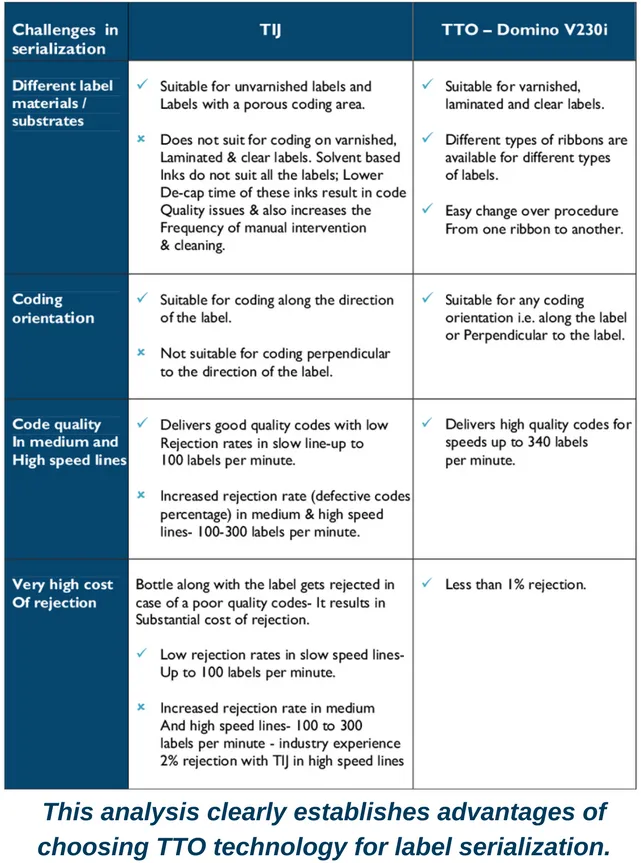
The below table provides detailed analysis of (TIJ) and TTO technologies with an objective of addressing the 4 big challenges:
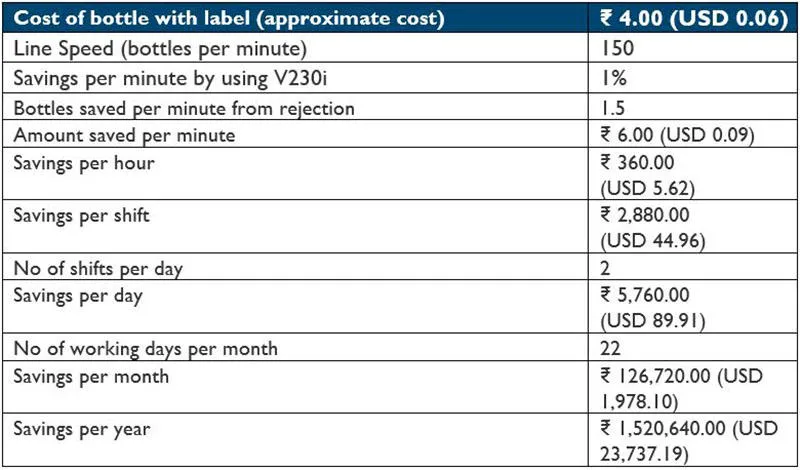
Case Study: Impact of rejection rate on operational costs
To understand the impact of high rejection ratio on operational cost, we illustrated a case study below:
- Line Speed – 150 labels per minute
- Rejection rate with TIJ – 2%
- Rejection rate with Domino V230i TTO – 1% (Actual reject rates are less than 1%)
The codes on labels are scanned using 360 degree camera scanners and bottles with defective codes are rejected. It is not just the label, but also the bottle which gets rejected.
A quick glance on the potential savings which Domino V230i Thermal Transfer Over printer (TTO) can make are mentioned below:
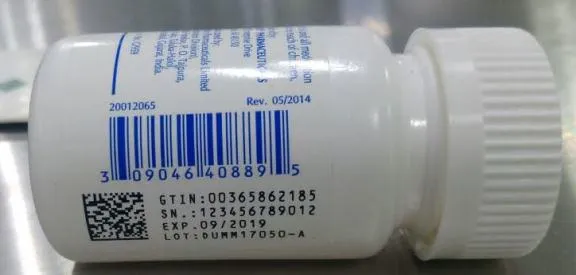
Bottle label coded with Domino V230i TTO, Grade “A”
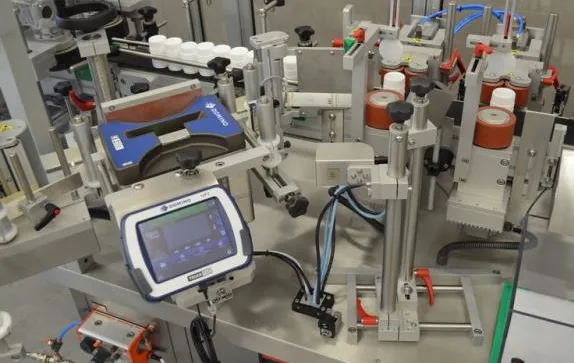
Domino V230i TTO installation on Bottle labelling line
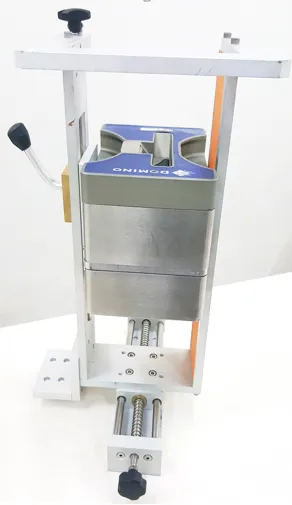
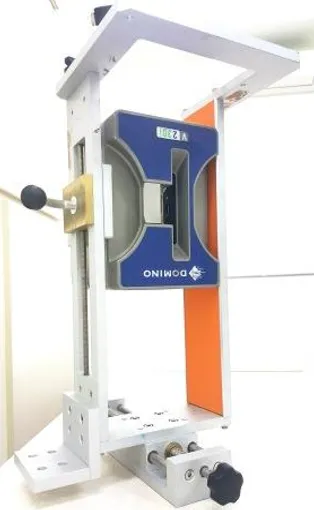
Customized Labeller Bracket
Domino’s labeller bracket provides great operator experience with flexibility of changing printer position in X axis as well as Y axis, enabling flexibility to code on different sizes of labels. The printer orientation can also be changed to suit the coding window orientation of labels.
To find out more about the coding technologies available for the Pharmaceutical industry, please write to:
[email protected] or call us at +91-9599488058