
Consumer demand for product information and evolving regulatory requirements are pushing conventional labels to their limits. As a result, extended content labels (also known as expanded content labels) are gaining popularity as brands seek ways to increase the amount of information on packs without increasing the pack size, with the market forecast to grow by 7.8% from 2027 to 2032 (Market Research Intellect).
What are extended content labels?
An extended content label is a product label with multiple layers that provide additional information without increasing the overall label footprint.
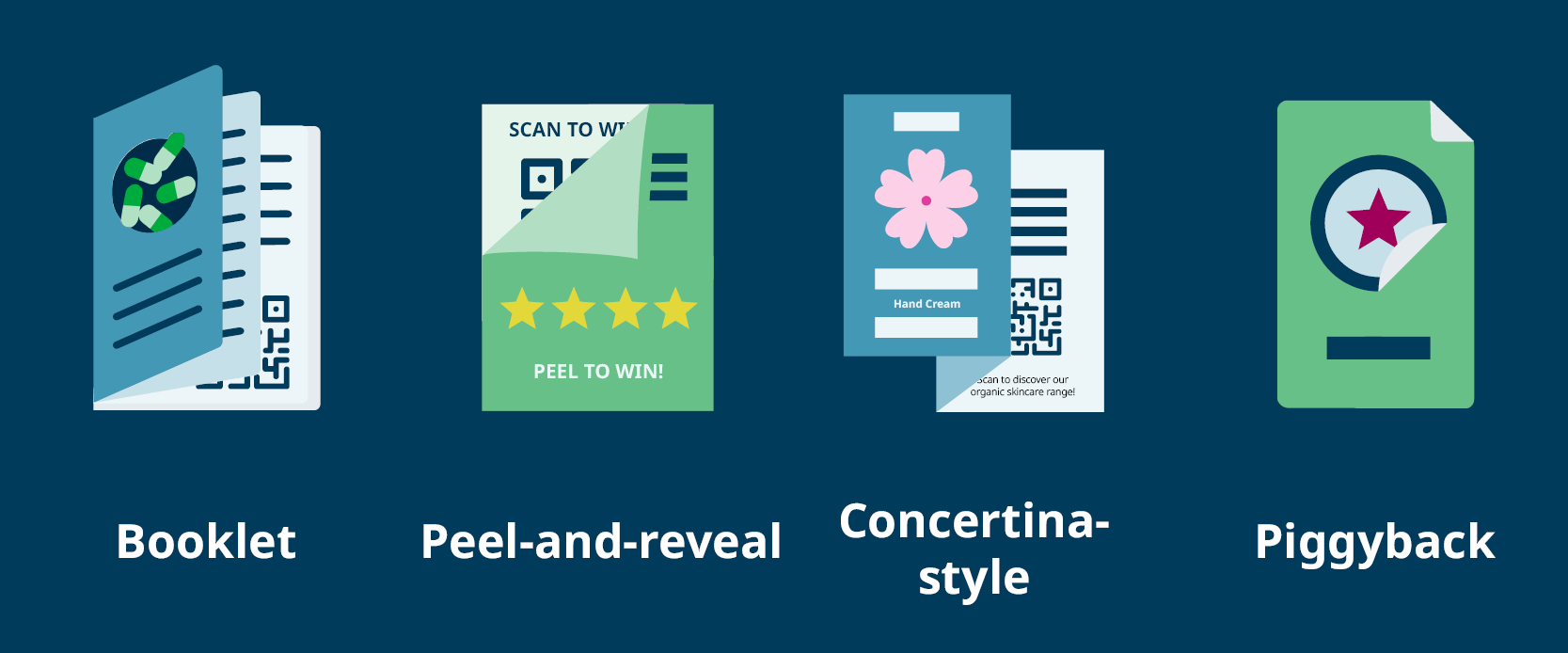
Unlike conventional labels that are printed on a single substrate layer, extended content labels can be presented in several formats:
- Multi-page booklets that are attached to a base label, commonly used in the pharmaceutical or cosmetics industry;
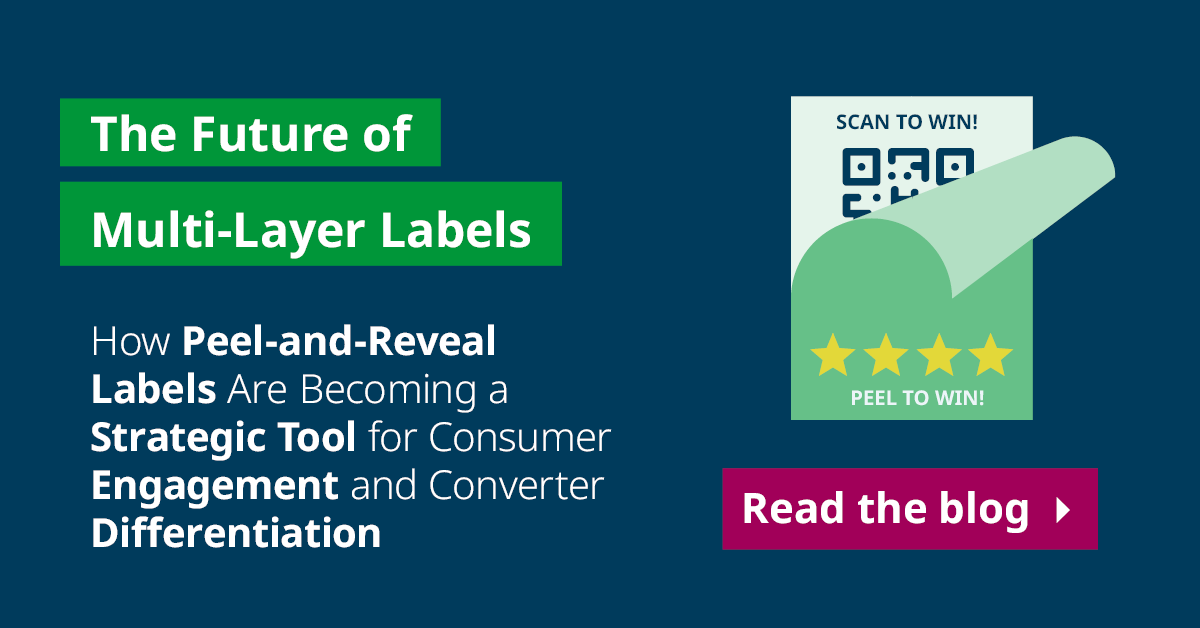
- Multi-layer peel-and-reveal labels that provide access to further information on printed inner panels when peeled, but that can also be resealed;
- Piggyback labels that consist of two layers using different types of adhesive, with the top layer, or a die-cut portion of it, designed to be peeled and reapplied to another surface, while the base label stays in place;
- Concertina-style panels that fold out to reveal more information.
Why are brands turning to extended content labels?
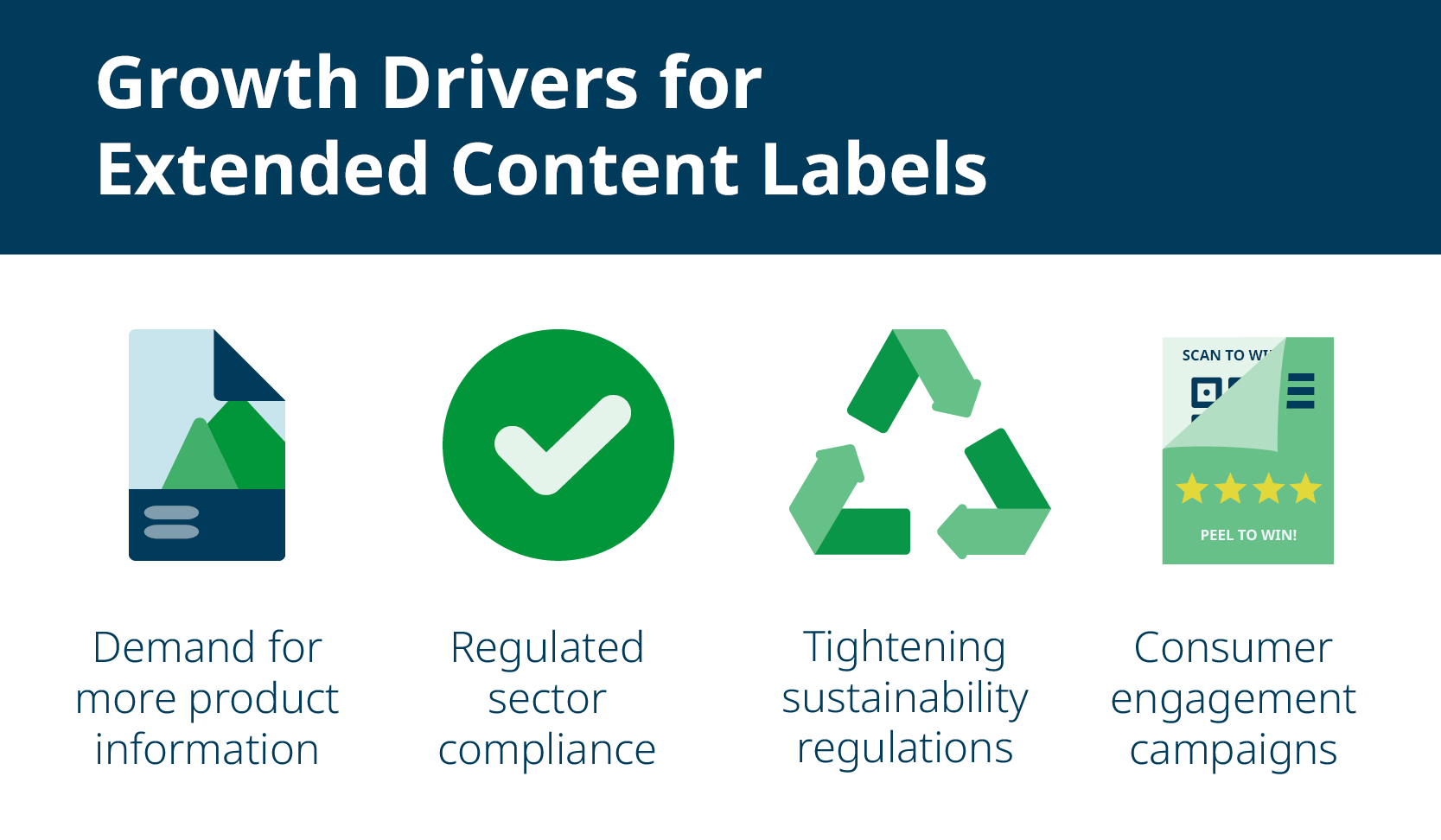
While QR codes are a popular way to provide additional, optional details to consumers, they cannot always replace mandatory on-pack information. Some mandatory labelling requirements must still be included on the pack or label, available to consumers without access to a smartphone or internet connection.
Brands in regulated sectors, such as pharmaceuticals, chemicals, cosmetics, and food and beverage, must present extensive mandatory information on their packaging, covering safety information, user instructions, ingredients, and allergens.
Sustainability regulations, such as the EU Packaging and Packaging Waste Regulation (PPWR), have added material composition and recycling information to the required list, while demanding a reduction in packaging size where possible, further increasing pressure on the limited space available.
As conventional single-layer labels struggle to meet these demands – especially on small packaging – extended content labels have become the established solution.
Extended content labels give brands a larger, more flexible canvas to share information in a consumer-friendly, compliant way. By placing non-essential point-of-sale information on secondary layers, brands can focus the main label’s design on shelf appeal to attract consumers and drive sales where relevant.
An opportunity for label converters
Extended content labels are different from conventional labels. Because of the complexity of production in terms of web registration and tension control, and higher demands for supporting documentation such as compliance statements and safety declarations in regulated sectors, not every label converter produces them.
This makes multi-layer labels less of a commodity, increasing their value to brands and giving converters a competitive edge to build profitable, longer-term relationships.
Brands’ interest in extended content labels as a medium for more connected, interactive packaging experiences unlocks further potential for converters to differentiate their offering.
Discover how brands are using extended content labels to drive consumer engagement and explore opportunities for converter differentiation.