
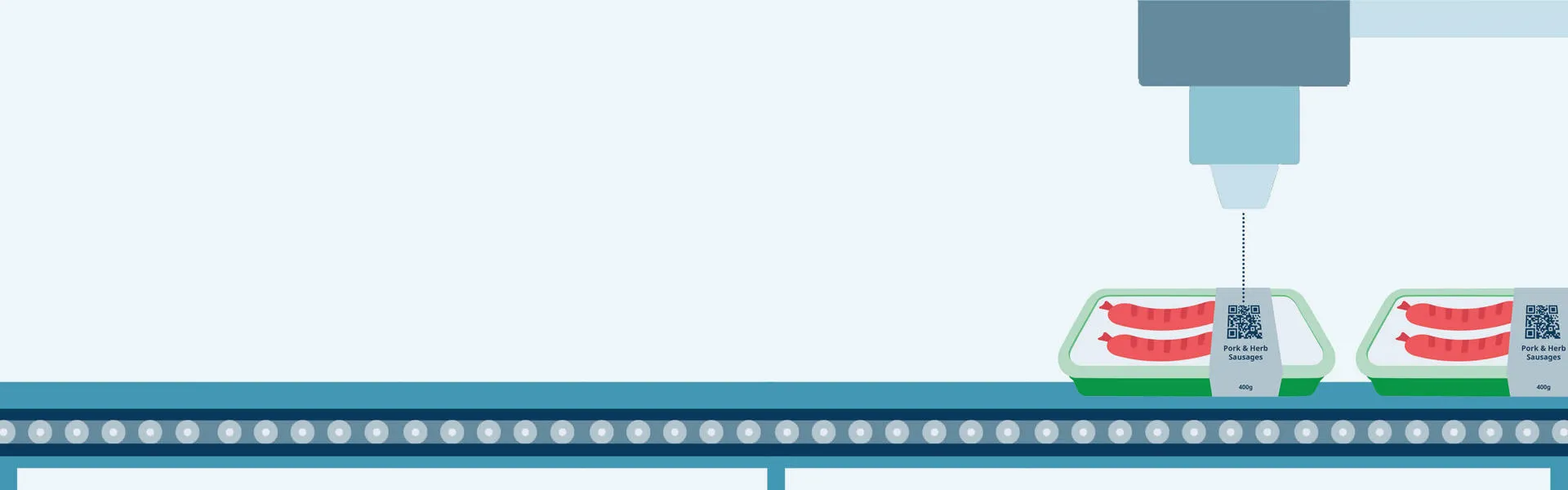
Food manufacturers are approaching a turning point in how product data is applied, verified, and shared. Retailers globally are accelerating their adoption of 2D codes powered by GS1, and major brands increasingly view them as central to connected packaging, enhanced food traceability, and stronger consumer trust. Although universal legislation is not yet in place, the momentum is unmistakable, and manufacturers are finding themselves under growing pressure to respond.
Many manufacturers are still at the early stages of understanding what 2D coding means for their production environment. Legacy machinery often sits alongside newer automation, and operational teams remain stretched, meaning any change must be achievable, low risk, and firmly rooted in day‑to‑day factory reality.
This blog outlines a practical, operationally grounded roadmap for beginning the 2D code journey that protects OEE, integrates with existing systems, and helps manufacturers and integrators prepare for evolving retailer and regulatory requirements.
What is the real value of 2D codes?
A major barrier to early adoption of 2D codes powered by GS1 is limited operational awareness. Many teams still perceive 2D codes as a retailer‑driven requirement rather than as an enabler of manufacturing efficiency and food safety. In practice, the benefits extend significantly further. Stronger food traceability becomes possible when 2D codes enable the capture of batch and item‑level information, helping manufacturers pinpoint issues with far greater accuracy, reducing the cost and disruption of recalls, and reinforcing food safety compliance across the factory and beyond. Alongside this, dynamic data applied at the point of manufacture provides clearer visibility into shelf‑life, strengthening stock rotation and reducing the risk of short‑dated or expired stock progressing through the chain.
The value also extends beyond operations to consumers, who increasingly expect immediate access to trustworthy information. Connected packaging built on 2D codes supports transparency around allergens, ingredients, sourcing, and sustainability, thereby strengthening brand confidence and reducing the volume of customer queries. Real‑time product data also enables a more responsive food supply chain, making it easier for manufacturers and retailers to coordinate production, logistics, replenishment, and reduce waste.
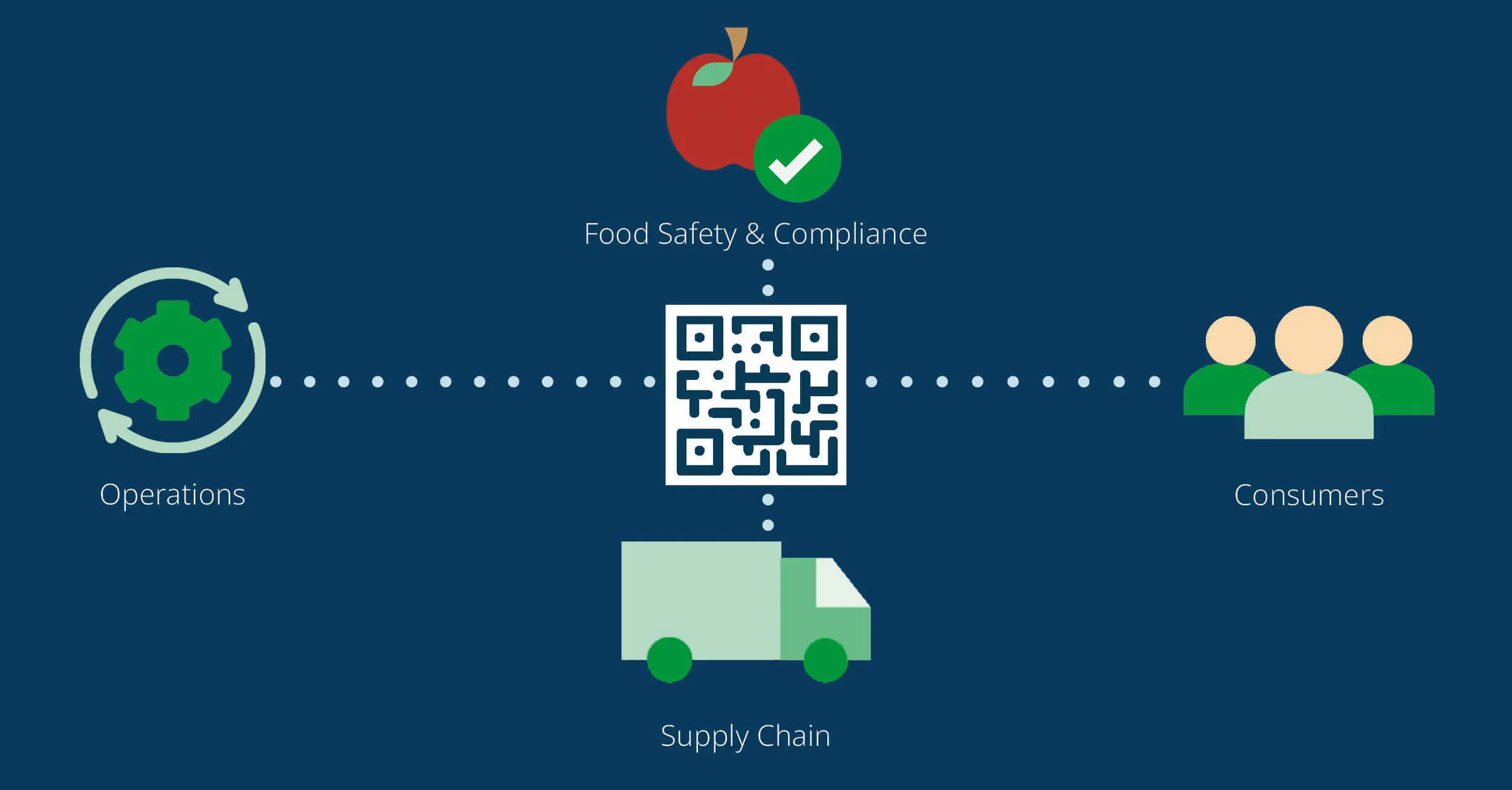
Once these broader advantages become clear, internal alignment becomes far easier and the case for investment much stronger.
The first steps to adopting 2D codes
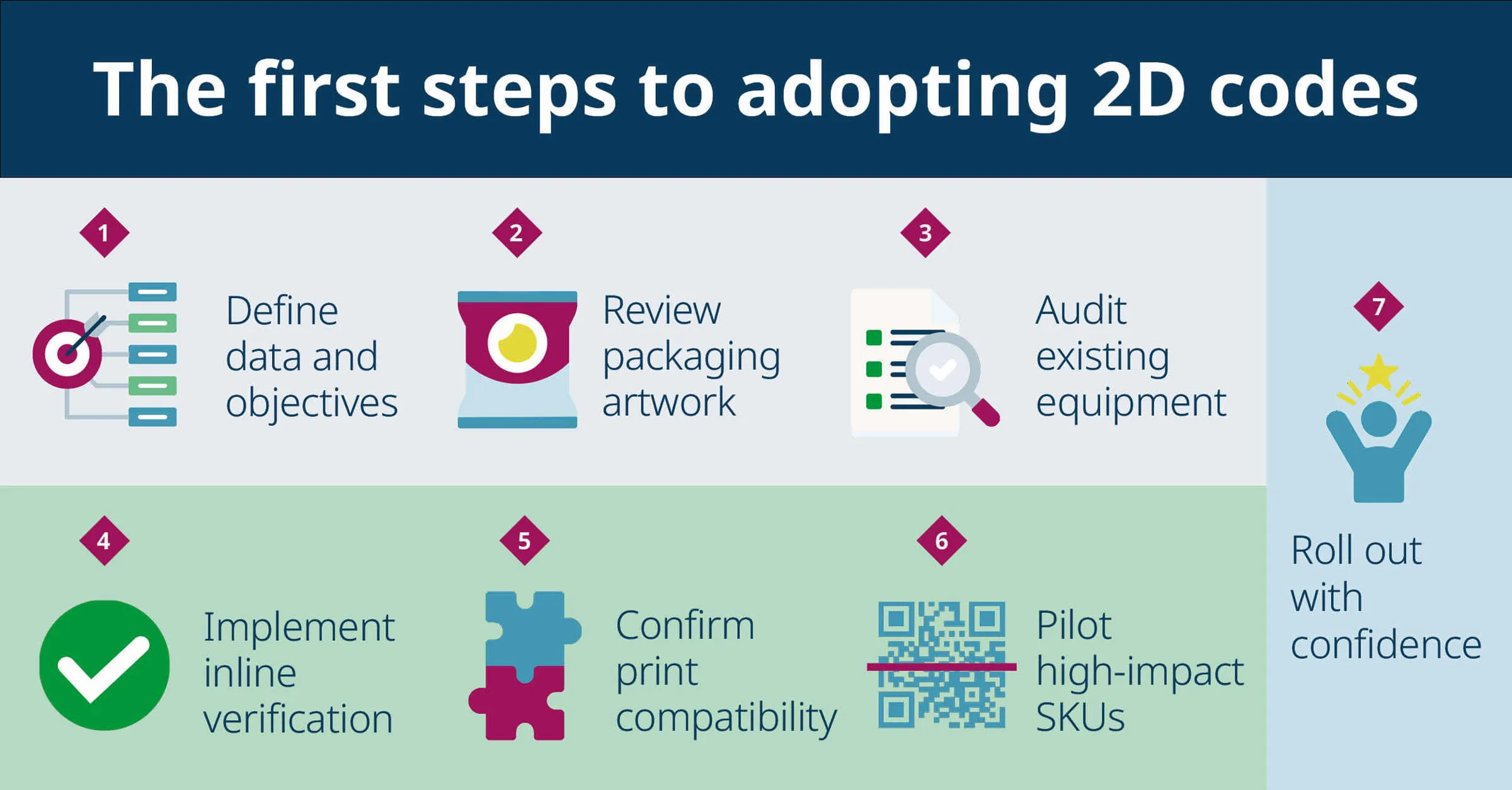
A structured, low‑risk roadmap helps teams adopt 2D coding confidently and with minimal operational disruption. The journey should begin by establishing a cross‑functional team to define the objectives for introducing 2D codes and determine the data to include.
Once the data strategy is clear, a review of all existing packaging artwork is essential to confirm space, placement, and readability for 2D codes, and identify where updates are needed to meet GS1 standards and retailer expectations.
With the artwork requirements understood, manufacturers should then conduct site audits of their current coding and verification equipment - assessing which already handle 2D codes and which need upgrading. At the same time, checking product-handling systems to ensure packs are presented consistently enough will support accurate printing and verification of these complex codes at line speed.
Only then should manufacturers implement an automated inline verification system. These systems combine camera‑based vision technology with real‑time code grading, ensuring every 2D code is present, readable, correctly structured, and applied to the right product. By automating this verification step, manufacturers significantly reduce the need for manual checks, cut waste associated with unreadable or incorrect codes, and prevent product recalls linked to mis-coding or non-compliance. This also provides reliable evidence of compliance with GS1 standards, strengthening food safety compliance and building trust across the supply chain.
With robust verification in place, auditing substrate and ink/ribbon compatibility becomes a natural next step. This helps ensure durable, high-quality code across all materials and prevents print-related line stoppages.
A controlled pilot then enables teams to fine‑tune the entire setup. By adjusting line speeds, lighting conditions, reject logic, and equipment integration on one or two high‑impact SKUs - especially those with shorter shelf life or destined for markets already adopting connected packaging - manufacturers generate early value while limiting disruption. A successful pilot also strengthens the internal business case for wider rollout, moving the organization closer to future‑ready, fully connected operations.
Integrating 2D coding capability with legacy systems
Although older machinery is often perceived as a barrier, integration with legacy systems is often far more manageable than expected. Modern printers, scanners, and vision systems are modular and can be retrofitted onto most existing lines with minimal engineering effort, reducing the need for major capital investment or lengthy downtime. Mapping data flows between printers, cameras, PLCs, and IT systems also becomes essential as 2D codes introduce new data types. Understanding how information moves across the line helps avoid bottlenecks and prevents downstream verification issues. Not every line needs upgrading at once; focusing on the lines where impact is greatest - such as chilled products, ready‑to‑eat meals, or goods destined for 2D‑ready retailers - creates early wins and builds organizational momentum.
The road ahead for 2D codes in food manufacturing
Adoption of 2D codes is part of a much wider global shift towards more transparent, data‑driven food supply chains. It aligns closely with rising consumer expectations, evolving retailer requirements, and the wider push for digitalized, interoperable product data. Manufacturers that take early action position themselves strongly, benefiting from more robust food traceability and compliance with food safety standards, reduced waste through better stock accuracy, fewer rejections or relabelling events, and enhanced brand reputation through connected packaging. They also strengthen their readiness for future market demands while improving operational resilience with fewer manual checks and clearer audit trails. For integrators, the shift represents a significant opportunity to deepen partnerships by helping customers navigate both operational and digital transformation.
Manufacturers do not need to wait for legislation or commit to wholesale equipment replacement to begin. By closing the current knowledge gap, focusing on achievable operational wins, and integrating new capabilities with existing assets, they can introduce 2D codes with confidence and clarity. The move towards 2D codes powered by GS1 represents a shift towards smarter and more connected food manufacturing - and those who take the first steps now will be well placed to lead the next generation of the food supply chain.
Moving to 2D codes introduces new considerations that directly affect scan success, food safety, and retailer acceptance. From cell size and data structure to packaging shape and verification, understanding these factors early helps manufacturers avoid costly rework and disruption. Explore the key considerations for successful 2D code implementation.
For more practical information on printing 2D codes, please visit What data to include in QR code powered by GS1